Maxbond
Request a Quotation for this product
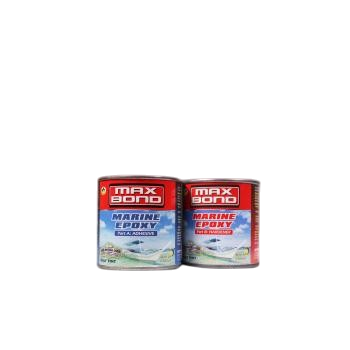
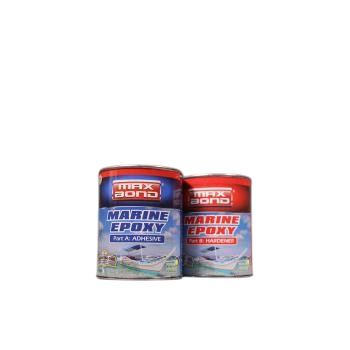
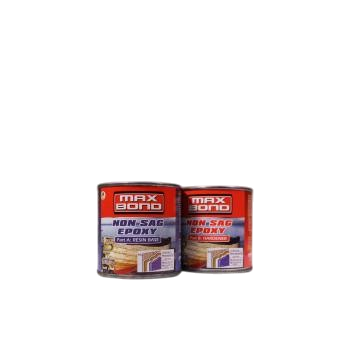
Non Sag Epoxy Half Pint Set
₱228.00
Epoxy Marine Non-Sag Putty
MAX BOND NON-SAG EPOXY is a handy compound with with a putty-like, non-flowing consistency, making it very suitable for use as an adhesive, sealant, and gap filler especially in boat making applications. It performs well on vertical or overhead applications. Its bonding capability exhibits outstanding adhesive strength, impact, and mechanical strength. It also has the capability to resists against acids, alkalis, oils, and saltwater.
USES/AREA OF APPLICATION
-As an adhesive
Dry or damp surfaces of wood, metal, concrete, glass, fiberglass, (FRP or GRP) and some plastics
Attachment of metal fixtures, hull fittings, and trims
Mounting engine bolts and metal or concrete pipe joints
-As a sealant
Wood or metal structures encapsulation to strengthen and protect them from corrosion, deterioration, and decay
Rough or imperfect grains of wooden hulls and structures
Leaks on rigid pipe joints
-As a filler
Dents or curves and punctured holes of metal structures such as cars, trucks, other vehicles or equipment
Gaps and other irregular surfaces of wooden boat hull structures
Uneven pattern of fiberglass (FRP or GRP)
Sheathing of boat hulls prior to finishing or painting.
MAX BOND NON-SAG EPOXY is a handy compound with with a putty-like, non-flowing consistency, making it very suitable for use as an adhesive, sealant, and gap filler especially in boat making applications. It performs well on vertical or overhead applications. Its bonding capability exhibits outstanding adhesive strength, impact, and mechanical strength. It also has the capability to resists against acids, alkalis, oils, and saltwater.
USES/AREA OF APPLICATION
-As an adhesive
Dry or damp surfaces of wood, metal, concrete, glass, fiberglass, (FRP or GRP) and some plastics
Attachment of metal fixtures, hull fittings, and trims
Mounting engine bolts and metal or concrete pipe joints
-As a sealant
Wood or metal structures encapsulation to strengthen and protect them from corrosion, deterioration, and decay
Rough or imperfect grains of wooden hulls and structures
Leaks on rigid pipe joints
-As a filler
Dents or curves and punctured holes of metal structures such as cars, trucks, other vehicles or equipment
Gaps and other irregular surfaces of wooden boat hull structures
Uneven pattern of fiberglass (FRP or GRP)
Sheathing of boat hulls prior to finishing or painting.
Related Products
More from Maxbond